Neighborhood
Mid-City Industrial
Minneapolis, Minnesota US
AI Summary•Updated August 2026
Area
1.06 mi²
ZIP Code
55413
County
Hennepin County
State
Minnesota
Redfin — median sale & volumeZillow ZORI — asking rentFEMA National Risk Index v1.20OpenStreetMap — POIFBI UCR — state crimeEPA — radon zonesWashU ACAG — satellite PM2.5EPA FRS / BTS — hazard screeningUS Census ACS / TIGER 2024
Verified Price · Median Sale
$342,348
YoY+4.0%
Gross Rental Yield
6.1%
Listed rent · ZORI annualized
Red Flag Index
Moderate
53 / 100
Walkability Score
22
OpenStreetMap POI density · national percentile
Education Score
15 / 100
Pre-pandemic SEDA (2018/19) · district proxy
AI Score
52
DistrictScore attractiveness · national model
Mid-City Industrial Property Prices & Rental Yield
Verified Redfin sale data and Zillow ZORI asking rent for Mid-City Industrial, Minneapolis.
Unlock the Mid-City Industrial 12-month price trend
See the full Verified vs Listed price history — free with a DistrictScore account.
Sign in to view — freeMarket Economics Snapshot
Aug 2026| Metric | Value | YoY |
|---|---|---|
| Median Sale Price | $342,348 | +4.0% |
| Price / Sq Ft (Verified) | $237/sqft | +0.1% |
| Asking Rent (Median) | $1,780/mo | +3.0% |
| Gross Rental Yield | 6.1% | — |
| Liquidity Score | 19 / 100 | Low |
| Homes Sold (Period) | 35 | -40.7% |
Is Mid-City Industrial Safe? Natural-Hazard Risk
FEMA National Risk Index composite across eight hazards, plus inherited Minnesota crime context.
Unlock the Mid-City Industrial risk report
See all eight FEMA hazard scores and the AI risk insights with Pro.
Unlock with ProMid-City Industrial Environment & Safety
Satellite PM2.5 air-quality history, FBI UCR crime trend (Minnesota-level, the finest official aggregation), EPA radon potential and point-source hazard screening.
Unlock Mid-City Industrial environment & safety
See air-quality history, crime trend, radon potential and hazard screening with Pro.
Unlock with ProWalkability & Amenities in Mid-City Industrial
Amenity density and pedestrian access from OpenStreetMap points of interest.
Walkability & Amenities
OpenStreetMap POI22
Minimal
Walkability Score
3
Grocery
5
Dining
0
Schools
0
Universities
0
Hospitals
0
Pharmacies
5
Parks
0
Rail Transit
0
Coworking
POI counts are amenities within Mid-City Industrial's boundary plus a 400 m walk buffer. Rail transit excludes bus stops.
Mid-City Industrial vs Minneapolis vs Minnesota
How Mid-City Industrial benchmarks against its city and state medians.
Unlock the Mid-City Industrial benchmark
Compare Mid-City Industrial against Minneapolis and Minnesota medians with Pro.
Unlock with ProBuying Property in the US as a Foreigner
Federal & Minnesota tax facts for non-resident buyers, plus the latest local market news.
Buying as a Foreigner
US Tax & OwnershipApplies to everyone7
Capital Gains (Federal)
Long-term capital gains taxed federally at 0/15/20%, plus a 3.8% Net Investment Income Tax on higher incomes (2026).
Property Tax
Property tax: ~0.99% average effective rate (statewide average; set and collected locally).
State Income Tax
State income tax up to 9.85%; rental income is taxed at these rates.
State Capital Gains
Capital gains are taxed as ordinary income at state rates.
Transfer Tax
Real estate transfer tax: deed tax 0.33%.
Assessment Cap
No Proposition 13-style assessment cap; property is reassessed at market value.
Mansion Tax / Rent Control
No statewide mansion tax or statewide rent control.
US citizens & tax residents7
Primary-Home Exclusion
Selling your main home: exclude up to $250k of gain (single) / $500k (married) if you owned and lived there 2 of the last 5 years.
1031 Like-Kind Exchange
A 1031 like-kind exchange defers capital gains tax on investment property; 45 days to identify, 180 to close. Real estate only.
Depreciation Recapture
Residential rentals depreciate over 27.5 years; on sale, recaptured depreciation is taxed up to 25% (Section 1250).
Mortgage Interest Deduction
Mortgage interest is deductible on up to $750k of home debt. The SALT cap rose to $40,000 for 2025-2029 (reverts to $10k in 2030).
Opportunity Zones
Opportunity Zones are now permanent (2025): reinvested capital gains get deferral plus a basis step-up, and are tax-free after 10 years.
Rental Income (Resident)
Rental income is reported on Schedule E; passive-loss rules (Section 469) limit deducting rental losses against other income.
1031 State Conformity
The state conforms to the federal 1031 like-kind exchange rules.
Foreign buyers (non-residents)5
FIRPTA (Foreign Sellers)
FIRPTA: the buyer withholds 15% of the gross sale price when a nonresident sells US property. It is an advance deposit, not the final tax.
Non-Resident Capital Gains
Nonresident sellers pay US capital gains tax (generally 15-20%) on the net gain via Form 1040-NR; FIRPTA withholding is credited.
Non-Resident Rental Tax
Nonresident rental income is taxed at 30% of gross by default, or on net income at graduated rates via a Section 871(d) election (W-8ECI).
Estate Tax (Non-Resident)
Nonresidents get only a $60,000 US estate-tax exemption (vs $13.99M for residents); US property above it is taxed up to 40%. Treaties may help.
ITIN Requirement
Nonresidents without an SSN need an ITIN (Form W-7) to file US tax returns, claim FIRPTA refunds, and report rental income.
Talk to a US real-estate tax advisor
FIRPTA, ITIN & Minnesota property-tax guidance for foreign buyers
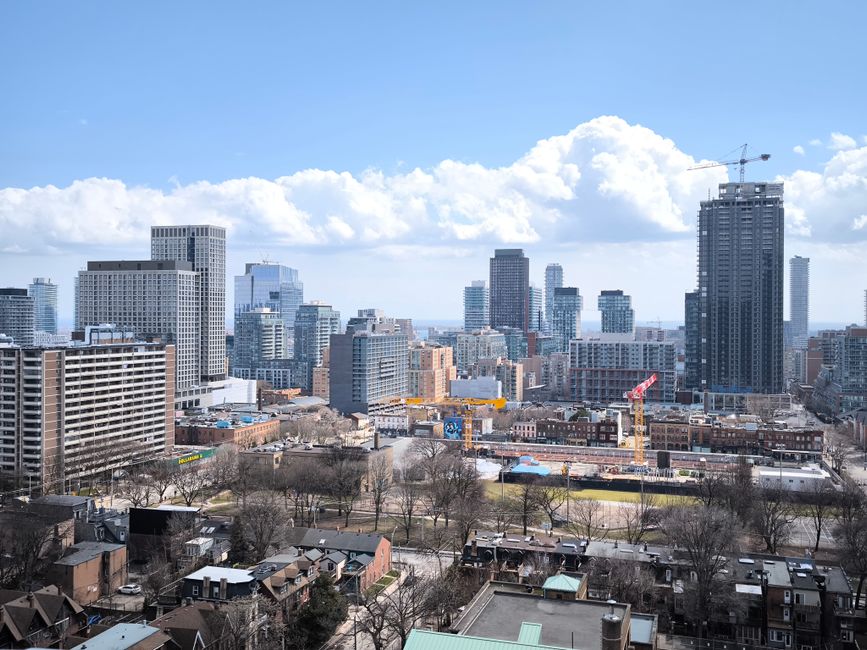
Neighborhoods near Mid-City Industrial
Compare Mid-City Industrial with nearby neighborhoods in Minneapolis.
Unlock deeper insights on Mid-City Industrial
Deeper data. Smarter decisions. Stronger returns.
Full Risk Reports
Tract-level hazards
Investment Score
AI-driven analysis
Export & Reports
PDF & Excel
Priority Support
Fast-track help